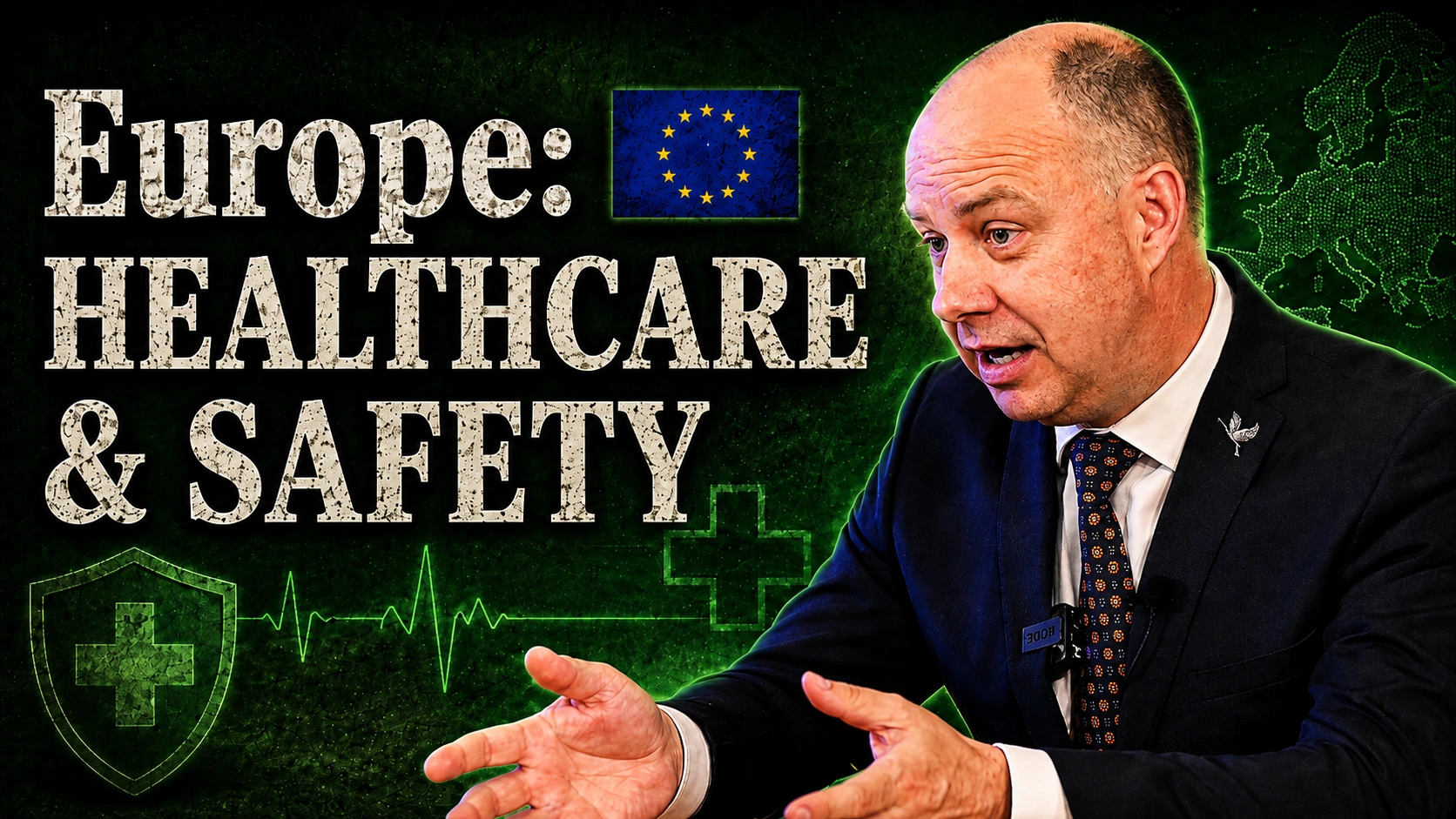
”Healthcare is security.”
– MEP Aurelijus Veryga
Brussels: Is Europe prepared for war and other major crises?
In an exclusive interview at the European Parliament, MEP Aurelijus Veryga, Lithuania's former health minister, discusses Europe's preparedness for war and major crises.
Europe’s crisis preparedness is about the ability to maintain critical societal functions during war and other serious crises. For the healthcare system, this means resilient hospitals, sufficient emergency care capacity, and trained healthcare personnel. It also requires secure access to energy, water, and essential medications. Verygas’s main message is that a functioning healthcare system is therefore also a matter of national security.
At the same time, Veryga warns of Europe’s dependence on third countries for critical medicines and pharmaceutical ingredients. He argues that Europe must reduce unnecessary bureaucracy and strengthen domestic production. Otherwise, drug prices could rise sharply. In the interview, Veryga warns that certain drugs could potentially become up to five times more expensive. This could have serious consequences for patients, including people with diabetes.
A new political cooperation in Europe?
Veryga also addresses the changing political landscape in Brussels. According to him, cooperation between conservative forces and right-wing parties is growing in an effort to protect Europe’s industrial base. His argument is simple: Europe cannot allow environmental regulations and rising costs to destroy its own industry. From steel and chemicals to pharmaceuticals and energy, Europe needs to remain competitive, Veryga argues. This is necessary to preserve jobs, production capacity, and strategic independence.
Then the debate gets heated
The conversation takes a sharp turn when the topic shifts to nicotine alternatives. Veryga is confronted with research brought up in the discussion. It indicates that certain alternative nicotine products carry significantly lower risks for certain diseases and types of cancer than conventional smoking. Sweden’s experience is also brought up. The country has achieved exceptionally low smoking rates and has been described as ”smoke-free” in the public health debate. Snus and nicotine pouches are often highlighted as part of the Swedish experience.
But the issue remains highly controversial.
How should nicotine alternatives be viewed? Are they primarily a risk to a new generation, or can they serve as a harm-reduction tool for adult smokers? The interview turns into a heated discussion about the research, Sweden’s experiences with snus and nicotine pouches, and the future of harm reduction in the tobacco sector in Europe.
One thing is clear: Europe's nicotine debate is far from over.
Adam Schlüssler,
EPHI's Brussels representative
Watch the full Interview here.