Ephis CEO comments on the collaboration with Henrik Jönsson

As the leader of the Social Democrats, Magdalena Andersson, suggested in the newspaper Dagens Nyheter that the Youtuber Henrik Jönsson spreads hatred against Social Democrats and has a suspicious financing, I feel a need as EPHI's CEO to clarify a few things.  


The Environment and Public Health Institute (EPHI) is a non-profit, non-partisan think tank that publishes reports, runs the podcast Health for the unhealthy and organizes seminars on our focus areas of health and environment. EPHI is driven by the conviction that free enterprise, economic growth, new technologies and free choice are a prerequisite for solving future challenges in both health and the environment. We are a small organization that brings together a large network of academics, entrepreneurs and opinion leaders.

We work together with other opinion leaders, such as Henrik Jönsson who runs a large YouTube channel. 


Together with Henrik Jönsson we have developed concept 100 %. Our collaboration with Jönsson has never been hidden, on the contrary, it has been something we communicated diligently. Nor has the 100% show on Henrik Jönsson's channels hidden the fact that it is a collaboration with EPHI, as it says in the program's credits. Henrik Jönsson and I have been guests together in SvD's podcast where we told you about the 100% collaboration. 
 
Funding for EPHI's activities comes from various companies and organizations in Sweden, including the Free Enterprise Foundation. 


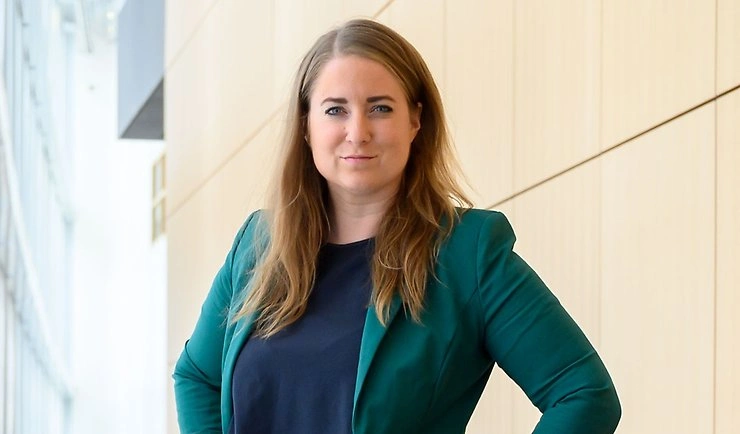
Marie Söderqvist, CEO of EPHI.

 

Contact us

Environment and Public Health Institute


Box 3039,
103 63 Stockholm

info@ephi.se

Org. number: 559342-4947

Latest from ephi.se on TT

Podcast: Health for the unhealthy

204 Effective Altruism

In this episode, we meet world-class artist José González, who talks about his commitment to effective altruism - a global movement based on the idea that, with evidence and analysis, we can do as much good as possible with the resources we have. González explains...

read more

203. How can psychogenic symptoms be transmitted?

In this episode, we look at examples of ”contagious psychogenic conditions”, with Kjell Asplund discussing apathetic children as one of several examples. Kjell Asplund is a medical doctor, professor of medicine at Umeå University and former director of the National Board of Health and Welfare. He helps...

read more

202. The conflict code

Is conflict something we should avoid - or take more seriously? In this episode, we meet Hana Jamali, psychologist and author of the book The Conflict Code, who argues that conflict is a vital part of close relationships. We talk about different styles of conflict...

read more

201. Abolishing the tax credit - at what cost?

The Social Democrats are campaigning to abolish the deduction for sick leave - a decision that could have serious consequences for the Swedish economy, according to Christian Ekström, CEO of the Taxpayers' Association. Why does sickness absence seem to increase during the Winter Olympics, moose hunting and the World Cup?.

read more

200. How endometriosis is treated

Endometriosis affects many people, but remains one of our most misunderstood diseases. In this episode, we explore the causes, symptoms and treatment with Ingrid Sääv, gynecologist and medical director of Stockholm's youth clinics.

read more