
Don't miss EPHI's exciting events during Almedalen Week 2025
As usual, we will be present in the pink house above Donner's place on Hästgatan 2 where we will organize several seminars and record 100% together with Henrik Jönsson.
Tuesday 24/6 10:00-11:00
A final round - 50 years of the total consumption model
For half a century, Sweden has clung to an idea that has shaped everything from party culture to public health - the restrictive total consumption model. The idea is simple: the more we drink as a collective, the more damage is done. Therefore, total consumption must be pushed back. And this is done with a state monopoly on sales. That's why incorporating something as seemingly simple as yard sales into the Swedish model becomes unreasonably complicated.
But how relevant is the model today? Has it even had any effect? And is it really so simple that no alcohol at all is always the best thing for public health?
In the recently published report A Final Round - 50 Years of the Total Consumption Model, EPHI takes a step back and looks at the model from three different perspectives - medical, economic and ideological. And describes its historical roots.
The conversation will include:
Fredrik Nyström, Physician and Professor of Internal Medicine, Linköping University
Adrian Mehic, PhD in Economics, Institute for Business Research, IFN
Mattias Svensson, Editorial Writer, Svenska Dagbladet
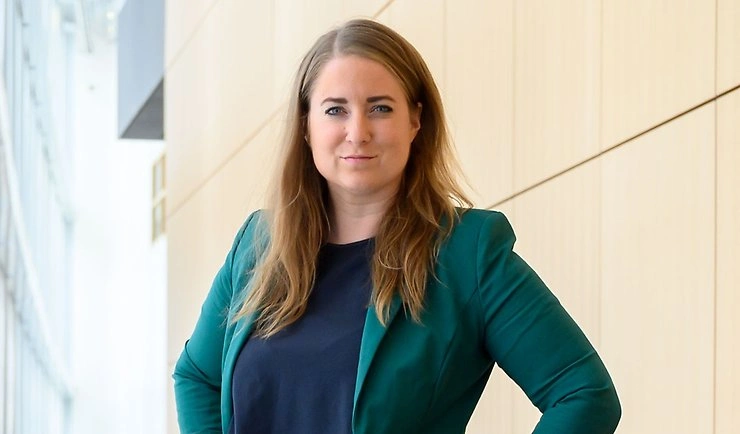
Emma Serner, Winegrower, Långmyre winery
The conversation will be led by Henrik Jönsson and Marie Söderqvist.
Feel free to sign up here
Wednesday 25/6 10:00-11:00
How China is breaking into Europe's green markets
China's growing dominance in green technology - from electric cars to solar panels - raises questions about Europe's industrial autonomy, security and climate policy. How should Sweden and Europe deal with a green shift where China is gaining market share?
China analyst Jojje Olsson, who has just written a report for EPHI on this very subject, talks about China's strategies for becoming a world leader in electric cars, solar panels and batteries. The panel includes researcher and social commentator Bjørn Lomborg, Liberal Party Secretary Simona Mohamsson and former MP Maria Wetterstrand.
The conversation will be moderated by Henrik Jönsson.
Feel free to sign up here
Friday 27/6 10:00-11:00
Who can speak to the powers that be?
The WHO is pushing to make it more difficult or even impossible to talk to politicians if you work in the beverage or food sector. It is already difficult, if not impossible, for the tobacco industry to talk to political representatives. Now the alcohol and food industries look set to suffer the same fate. Is this a good development that protects politicians and citizens from undue influence or is it a growing problem that large parts of the industry are excluded from talks with political representatives?
Participants: Henrik Samuelsson, Chairman of the Board of Food Drink Europe, Christian Carlsson (KD), Chairman of the Social Affairs Committee, Tobias Andersson (SD), Chairman of the Nutrition Committee and Elisabeth Thand Ringqvist (C), Vice-Chairman of the Nutrition Committee.
Moderator EPHI's CEO Marie Söderqvist together with Henrik Jönsson.
Feel free to sign up here.