
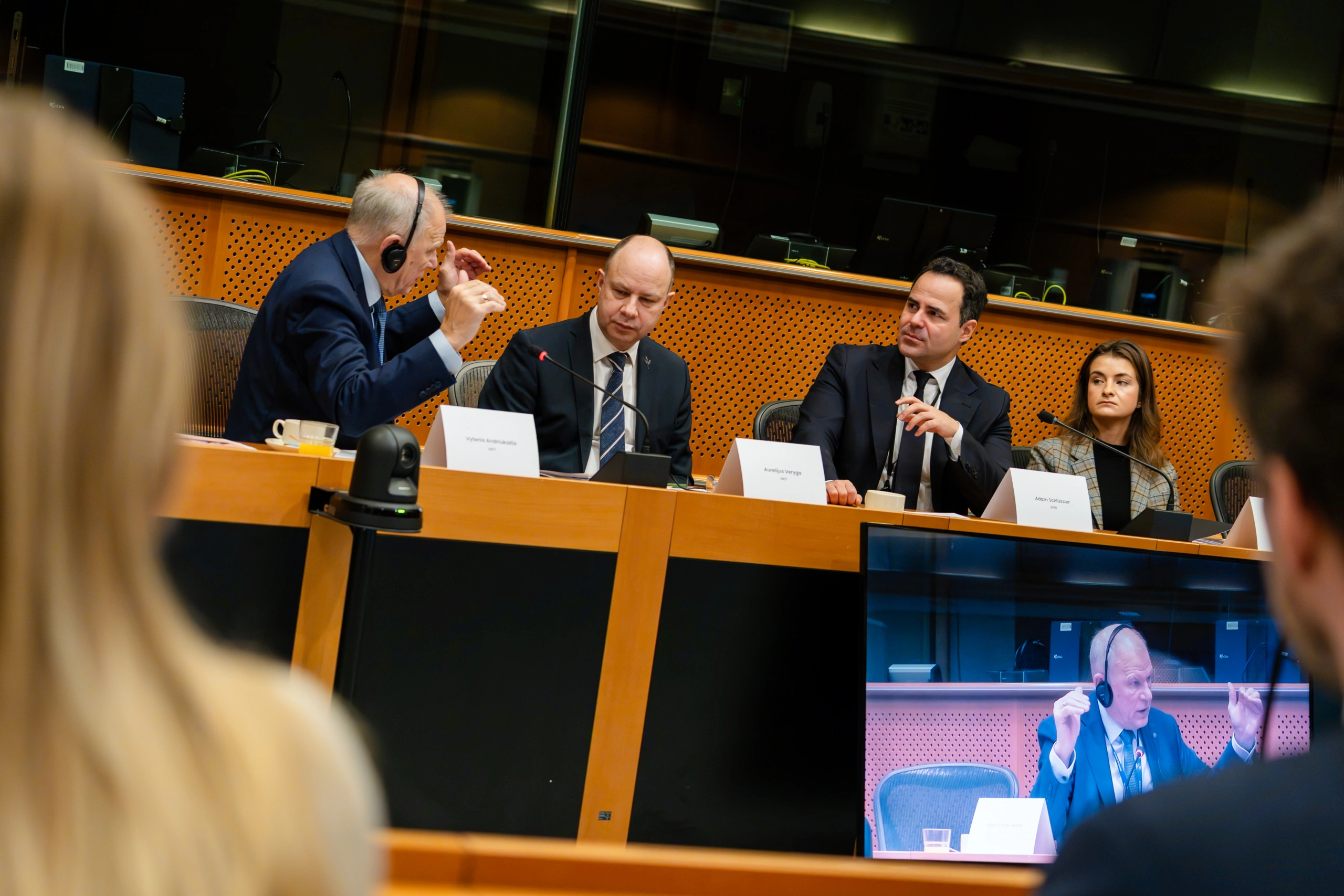
Leading politicians, business representatives, and media figures gathered at the European Parliament for the launch of EPHI’s new report: ”The Hidden Cost of an Unhealthy Europe”.
Brussels. Europe’s healthcare system is under pressure. And the cost of doing too little to prevent illness is rising!
That was the clear message in EPHI’s new report, ”The Hidden Cost of an Unhealthy Europe” was launched at the European Parliament.
The event brought together political heavyweights, healthcare experts, and leading business representatives to discuss one of Europe’s greatest challenges: Why do we spend so much on treating diseases instead of preventing them?
The message from Brussels: Europe must act before people get sick
The discussion was led and moderated by the event’s organizer, with Member of the European Parliament Aurelijus Veryga, former Minister of Health of Lithuania, serving as co-organizer. Participants in the discussion included Vytenis Andriukaitis, former Lithuanian Minister of Health and European Commissioner for Health, and Nicolina Söderqvist, CEO of EPHI.
Through his contribution to the EPHI report, Adrian Mehic brought a valuable economic perspective to the debate. He highlighted the economic consequences of poor health and the economic arguments for investing in preventive measures.
Major players in the business community, including Sanofi, were also in attendance and actively contributed to the debate by offering important industry perspectives.
The event attracted significant media attention. Representatives from Politico, Euractiv, The Parliament, Rapporteur, Euronews, and Wprost not only reported on the event but also actively participated in the discussion by asking insightful questions.
The message was clear: preventive measures must finally receive the political attention they deserve.
Europe's healthcare crisis cannot be solved simply by treating more people. It starts with keeping people healthy from the outset.
One thing is clear: Europe can no longer afford to ignore preventive measures
The report’s release was an important step toward raising the profile of preventive health care on Europe’s political agenda. Now the challenge is to turn words into action.
Learn more about the event
Summary
EPHI's report ”The Hidden Cost of an Unhealthy Europe” was launched at the European Parliament in Brussels. The discussion focused on the economic consequences of poor health and on why preventive measures need to be given greater priority in Europe’s health policy.
Key takeaways from the discussion
- Poor health entails economic costs and puts pressure on Europe's health care systems.
- Preventive health care needs to be prioritized at the policy level, alongside the treatment of diseases.
- The report's release highlighted the need to turn the discussion on prevention into action.
Cast
Participants in the discussion included Vytenis Andriukaitis, former Minister of Health of Lithuania and European Commissioner for Health, and Nicolina Söderqvist, CEO of EPHI. Aurelijus Veryga, a Member of the European Parliament and former Lithuanian Minister of Health, was a co-organizer. Adrian Mehic contributed an economic perspective through his work on the report. Representatives from the business community, including Sanofi, and several media outlets also participated.
Questions and Answers
Which report was released?
EPHI's report ”The Hidden Cost of an Unhealthy Europe”, which highlights the economic consequences of poor health and the case for preventive measures.
Where did the launch take place?
At the European Parliament in Brussels.
Where can I view the call?
The video is embedded in this post and can also be viewed at EPHI Europe's YouTube channel.