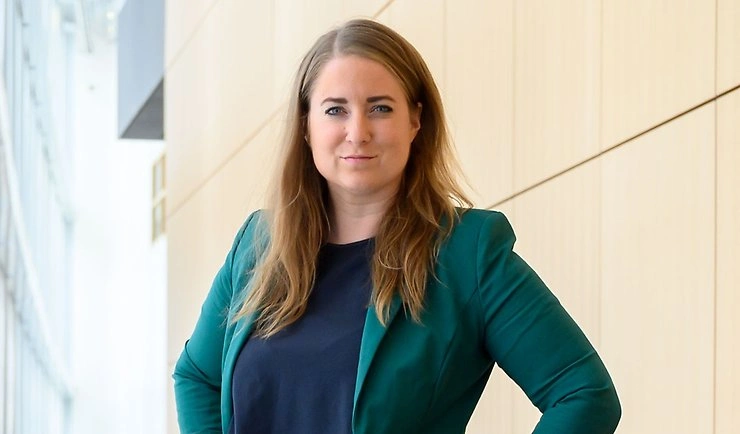

The climate benefit of Swedish exports - a new metric for calculating the climate impact of exports and imports.

Astrid Kander

The climate benefits of Swedish exports

- a new measure for calculation for the climate impact of exports and imports

Global climate change is a challenge that the world must take on together. A prerequisite for this is that individual countries can track emissions. This in turn requires accurate metrics. 

A country's total climate impact consists of that which takes place within its own borders and that which occurs abroad, through trade and international activities. However, it is widely recognized that the production emissions of an importing country do not give a true picture of the total climate impact, as it obscures the emissions that take place in other countries on its behalf to meet the demand it represents on the world market. Therefore, consumption-based emissions are increasingly used as a complementary measure. 

However, consumption-based emissions only capture half the picture of foreign trade. They focus on one scale - imports - but leave out the other - exports. As a result, countries like Sweden, which are characterized by a significantly less carbon-intensive energy mix than the world at large and significantly more climate-efficient export production, are disadvantaged. 

To address this, Professor Astrid Kander presents in this report a new metric, called the technology-adjusted carbon footprint. It is a measure that takes into account consumption, but also considers the climate impact of exports, making it more accurate. Kander says that because Sweden produces in an eco-efficient way, the environment benefits when other countries replace their own production with Swedish-made products. So we should not scale down our economy but - on the contrary - scale up. 

Climate impact of Swedish exports 1995-2020 - Astrid Kander (pdf)

Contact us

Environment and Public Health Institute


Box 3039,
103 63 Stockholm

info@ephi.se

Org. number: 559342-4947

Latest from ephi.se on TT

Podcast: Health for the unhealthy

194. The end of online dating

More and more singles seem to be getting tired of dating apps and want to meet in real life. In this episode, Olga Engvall, founder of the IRL-based dating service MinglMe, explains why today's singles are looking for real-life encounters, what's missing from the app culture - and...

read more

193. All about creatine

Creatine, one of the world's most well-studied supplements, has been shown to enhance the effects of exercise. In this episode, sports doctor Per "Pliggen" Andersson explains how the supplement works, and who benefits most from it.

read more

192. Too old to have children?

The likelihood of getting pregnant decreases significantly after 35. Egg freezing can extend the fertile period, but there is an upper limit. Thomas Brodin, a specialist in obstetrics and gynecology, says this.

read more

191. Election podcast: Simona Mohamsson (L)

Strangulation sex can be okay after all and healthcare is well suited for private providers, we discuss this and much more with Liberal Party leader Simona Mohamsson. The conversation is also available in video format here:...

read more

190. Slow down aging

What determines how our bodies age, and how can we slow down the process? Sara Hägg, associate professor of molecular epidemiology at Karolinska Institutet, talks about the latest research. 

read more

189. Don't blame porn

Testosterone deficiency is not part of normal aging, but is often due to lifestyle. This is according to Elin Gahm, senior physician at Anova and chair of the Swedish Andrology Association. She believes that more doctors should ask their patients about their sexual health.

read more