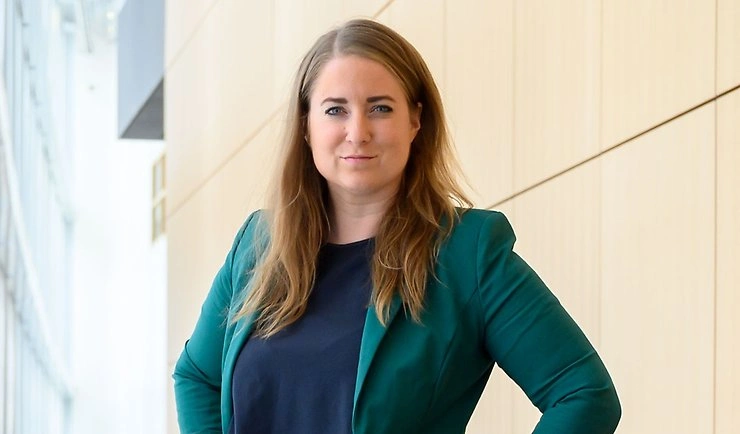

The climate benefit of Swedish exports - a new metric for calculating the climate impact of exports and imports.

Astrid Kander

The climate benefits of Swedish exports

- a new measure for calculation for the climate impact of exports and imports

Global climate change is a challenge that the world must take on together. A prerequisite for this is that individual countries can track emissions. This in turn requires accurate metrics. 

A country's total climate impact consists of that which takes place within its own borders and that which occurs abroad, through trade and international activities. However, it is widely recognized that the production emissions of an importing country do not give a true picture of the total climate impact, as it obscures the emissions that take place in other countries on its behalf to meet the demand it represents on the world market. Therefore, consumption-based emissions are increasingly used as a complementary measure. 

However, consumption-based emissions only capture half the picture of foreign trade. They focus on one scale - imports - but leave out the other - exports. As a result, countries like Sweden, which are characterized by a significantly less carbon-intensive energy mix than the world at large and significantly more climate-efficient export production, are disadvantaged. 

To address this, Professor Astrid Kander presents in this report a new metric, called the technology-adjusted carbon footprint. It is a measure that takes into account consumption, but also considers the climate impact of exports, making it more accurate. Kander says that because Sweden produces in an eco-efficient way, the environment benefits when other countries replace their own production with Swedish-made products. So we should not scale down our economy but - on the contrary - scale up. 

Climate impact of Swedish exports 1995-2020 - Astrid Kander (pdf)

Contact us

Environment and Public Health Institute


Box 3039,
103 63 Stockholm

info@ephi.se

Org. number: 559342-4947

Latest from ephi.se on TT

Podcast: Health for the unhealthy

205. last night in Sweden

In today's episode, we discuss gang crime and social unrest with Paulina Neuding, editorial writer and author. What's behind the trend, and why did it take so long to recognize the problem?

read more

204 Effective Altruism

In this episode, we meet world-class artist José González, who talks about his commitment to effective altruism - a global movement based on the idea that, with evidence and analysis, we can do as much good as possible with the resources we have. González explains...

read more

203. How can psychogenic symptoms be transmitted?

In this episode, we look at examples of ”contagious psychogenic conditions”, with Kjell Asplund discussing apathetic children as one of several examples. Kjell Asplund is a medical doctor, professor of medicine at Umeå University and former director of the National Board of Health and Welfare. He helps...

read more

202. The conflict code

Is conflict something we should avoid - or take more seriously? In this episode, we meet Hana Jamali, psychologist and author of the book The Conflict Code, who argues that conflict is a vital part of close relationships. We talk about different styles of conflict...

read more

201. Abolishing the tax credit - at what cost?

The Social Democrats are campaigning to abolish the deduction for sick leave - a decision that could have serious consequences for the Swedish economy, according to Christian Ekström, CEO of the Taxpayers' Association. Why does sickness absence seem to increase during the Winter Olympics, moose hunting and the World Cup?.

read more

200. How endometriosis is treated

Endometriosis affects many people, but remains one of our most misunderstood diseases. In this episode, we explore the causes, symptoms and treatment with Ingrid Sääv, gynecologist and medical director of Stockholm's youth clinics.

read more