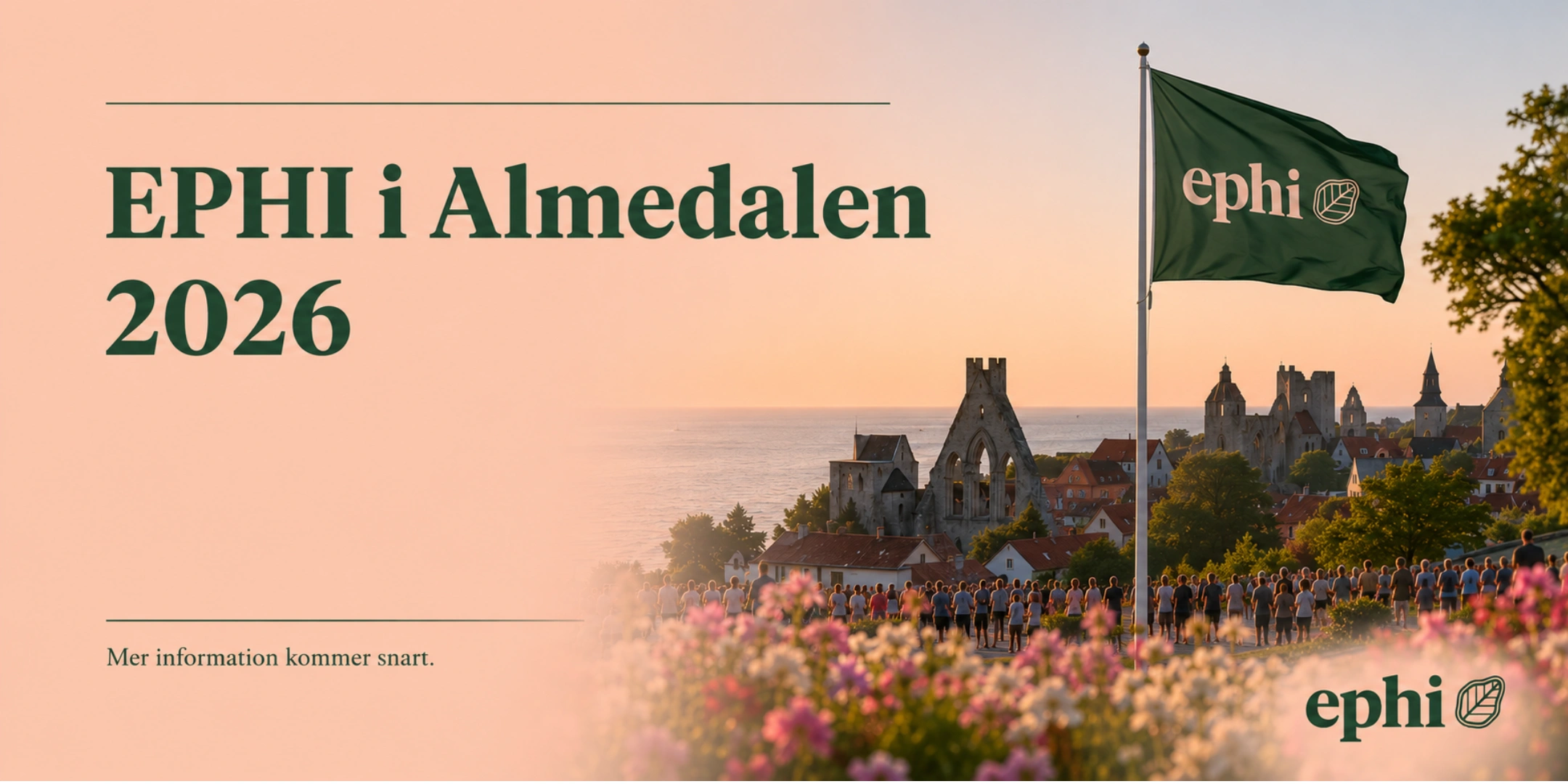
Don't miss EPHI's exciting seminars on Thursday, June 25
Sweden spends hundreds of billions on healthcare, but almost nothing on keeping people healthy
We spend almost SEK 700 billion a year on healthcare in Sweden, yet we are not getting healthier. The Swedish system is built to treat disease, not to prevent it. At the same time, we know that up to 80 percent of the healthcare burden comes from lifestyle diseases. That is, diseases we can largely influence ourselves.
The average Swede spends the last ten years of his or her life in poor health, and if we manage to reduce that time, there are major societal gains to be made.
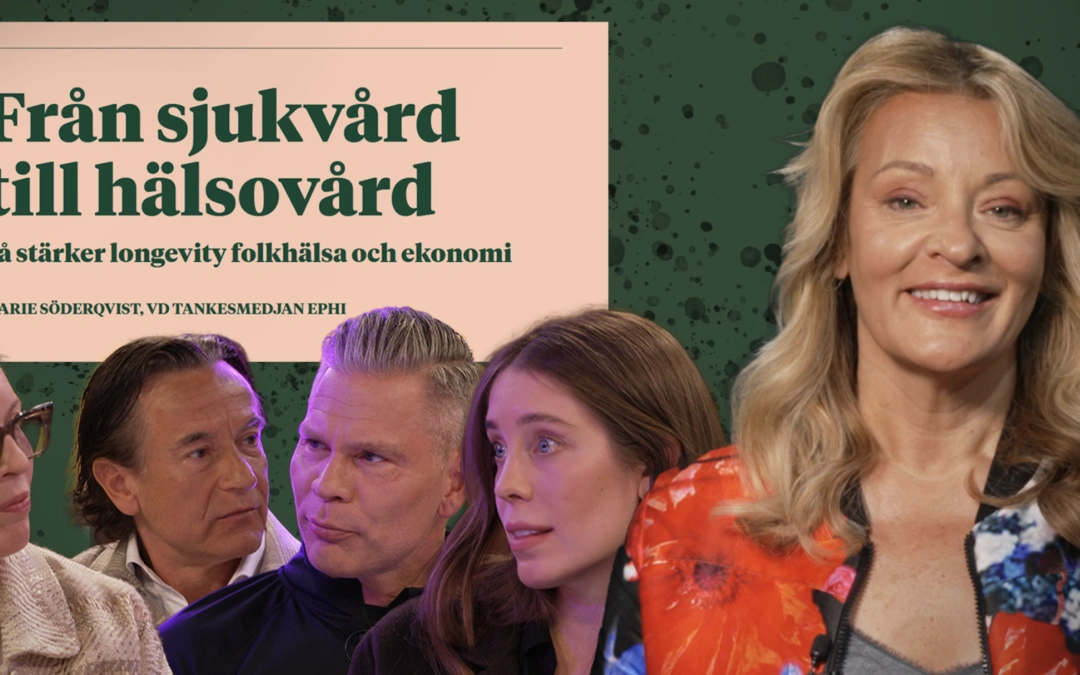
With the report “From health care to health care - how longevity strengthens public health and the economy”, we propose a shift from “How do we treat disease?” to “How do we keep people healthy for as long as possible?”.
The report argues that Sweden should shift its focus from treating disease to preventing it through early diagnosis, lifestyle interventions and new technologies. The goal is to extend people's healthy life years, reduce the burden of care and strengthen Sweden's position in the rapidly growing longevity sector. We will discuss this on stage together with an exciting panel.
Date and time: Thursday, June 25 at 11:00
Address: S:t Hansgatan 18, Folkhälsodalen, S:t Hans and S:t Pers Church Ruins
Guests: Karin Fälldin (C), Chairman of the Public Health and Dental Care Committee of the Primary Care Board, Region Stockholm, Jonas Lindberg (V), Regional Council, Region Stockholm, Magnus Elfdahl, Head of Risk and Health, Skandia, Vincent Amble-Naess, Doctor and host of the Health for the Unhealthy program.
The conversation will be moderated by EPHI's CEO Marie Söderqvist.
Who can talk to Brussels?
The WHO wants to limit contact between politicians and companies in the alcohol and food sectors, as has already happened with the tobacco industry. Will this protect decision-making from undue influence, or is there a risk that large parts of the industry will be excluded from the democratic process?
EU policymakers risk making poorer decisions if their contact with businesses and other stakeholders is further restricted. That is the conclusion of the EPHI report Who can talk to Brussels?. The report examines how the World Health Organization’s recommendations affect interactions between EU institutions and stakeholders in the tobacco, food, and alcohol sectors. The purpose of the guidelines is to protect policymakers from undue influence, but the reality is that decision-makers are missing out on important knowledge and experience from the industries affected by the regulations.
Date and time: Thursday, June 25 at 13.00
Address: S:t Hansgatan 47, Visby (Gotlands Bryggeri courtyard)
Guests: Anders Lindberg, political editor-in-chief at Aftonbladet, Joar Forssell, a member of the Riksdag for the Liberal Party,
Katja Werner, Public Affairs & Communications at the Swedish Brewers Association and Lars Appelqvist, CEO of Scan Sweden.
The call is led by Marie Söderqvist and Henrik Jönsson